St Catherine's Hill is a nature reserve just north of Christchurch, with woodland walks, open heathland and wide countryside views. Its 35 or so hectares are home to rare wildlife, including Dartford warblers, sand lizards and butterflies, alongside Bronze Age burial mounds, historic earthworks and dog-friendly walking routes.

Located just north of Christchurch, St Catherine's Hill is one of the area's most fascinating natural landmarks, combining beautiful countryside scenery with ancient history and remarkable wildlife.
Standing approximately 53 metres above sea level, the hill is the highest area of Christchurch and offers wonderful views across the surrounding landscape.
Covering around 35 hectares, the nature reserve features a mixture of open heathland, sandy paths and coniferous woodland, creating an attractive setting for walking, wildlife watching and outdoor exploration.
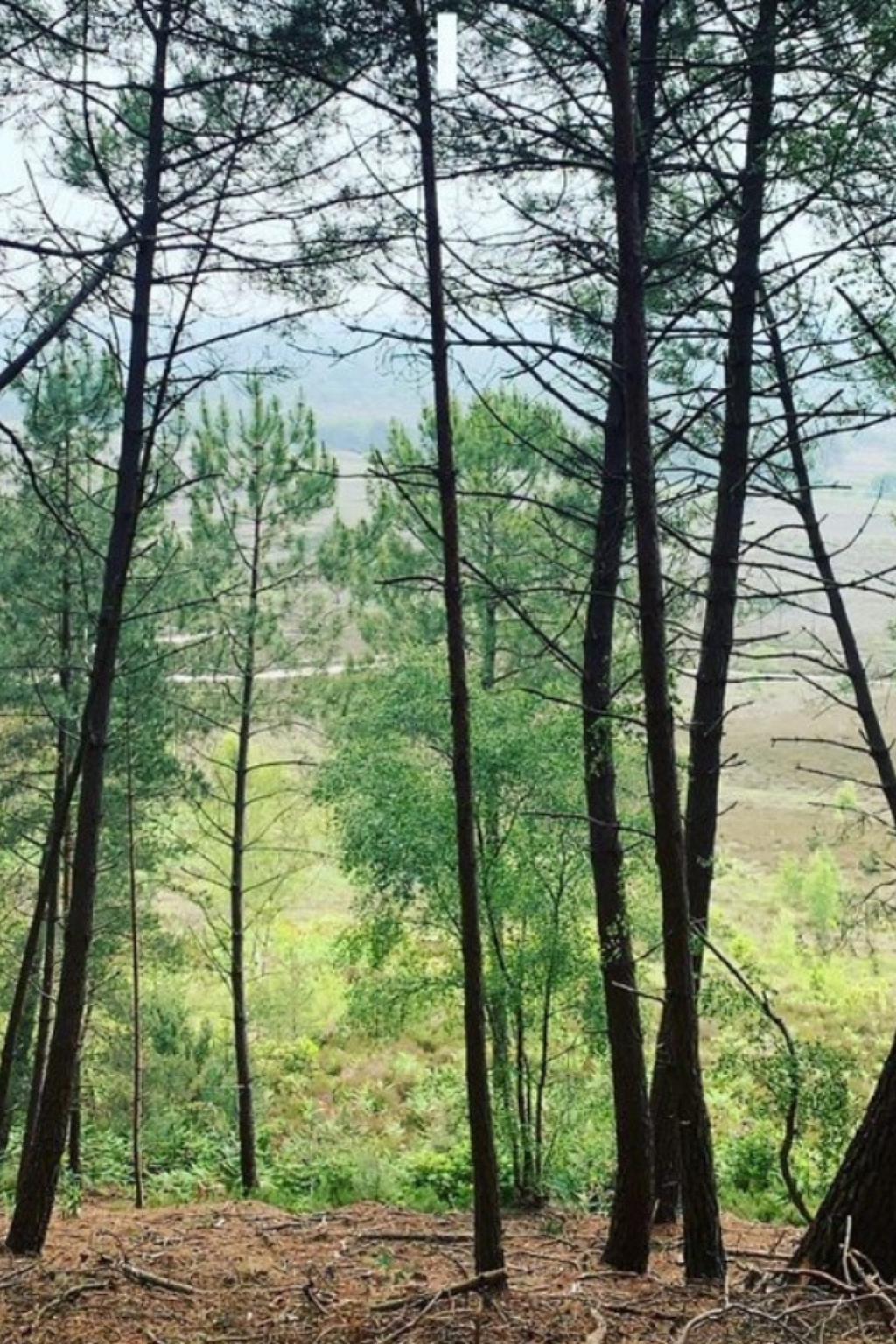
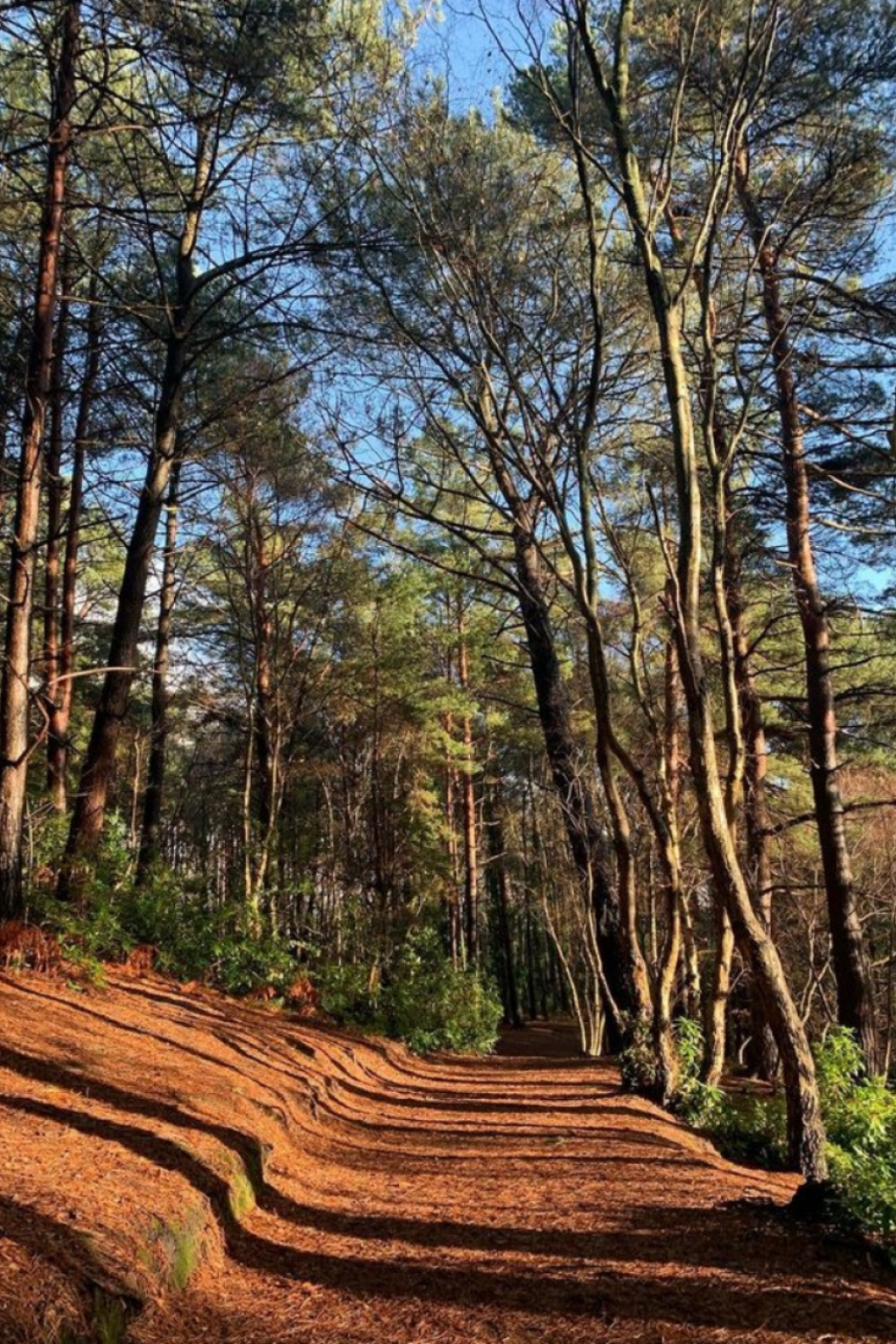
St Catherine's Hill offers a network of paths winding through heathland and woodland, with opportunities for both shorter strolls and longer walks.
The landscape changes as we explore, from shaded paths beneath towering pine trees to open stretches of heathland filled with heather, gorse and beautiful countryside views.
One of the highlights is reaching the higher ground, where the surrounding trees give way to panoramic views towards Christchurch, the Avon Valley and the wider Dorset countryside.
On clear days, views from parts of the surrounding heathland extend towards Hengistbury Head, the Isle of Wight and the New Forest.
The reserve's paths vary considerably, with some relatively gentle sections and others involving steep slopes, loose gravel or sandy ground.
Although a walk of approximately 2.1 miles can be enjoyed by combining different paths, this is not a single officially designated circular trail.
Visitors should choose a route suitable for their abilities and follow marked paths to avoid disturbing sensitive wildlife habitats.
St Catherine's Hill is particularly special for its wildlife, with its protected heathland providing important habitats for several rare species.
The reserve is designated as both a Site of Special Scientific Interest (SSSI) and a Local Nature Reserve, reflecting its ecological importance.
Birdwatchers may be lucky enough to spot Dartford warblers among the gorse or hear nightjars during the warmer months.
The heathland is also home to reptiles, including sand lizards, smooth snakes and adders.
Butterflies and dragonflies are another highlight, with species such as silver-studded blues, graylings and scarce chasers associated with the reserve's varied habitats.
During late summer, flowering heather adds beautiful purple colours to the open landscape, while golden gorse provides seasonal colour throughout much of the year.
Wildlife sightings are never guaranteed, but patient visitors who explore quietly may discover some of Dorset's most interesting natural inhabitants.
Please remember: This is a protected nature reserve. Stay on established paths, avoid disturbing wildlife and never attempt to handle reptiles.
Beyond its natural beauty, St Catherine's Hill has a fascinating history stretching back thousands of years.
Its elevated position made it an important landmark for early communities, with evidence suggesting the hill was used as a lookout or beacon from prehistoric times.
The surrounding ridges contain 11 ancient burial mounds, known as barrows, associated with Bronze Age communities.
Historic earthworks also provide evidence of later activity, including an enclosure thought to have been constructed during the Iron Age.
Archaeological records identify a Roman camp and the site of a medieval chapel, adding further layers to the hill's remarkable past.
More recently, St Catherine's Hill was used for military training, including exercises during the First and Second World Wars.
Today, the surviving earthworks provide a fascinating reminder of the many generations who have used this prominent landscape.
Visitors should admire historic features from established paths and avoid climbing on or disturbing ancient monuments.
St Catherine's Hill is a popular destination for dog walkers, offering woodland paths, open scenery and opportunities for longer countryside walks.
However, because the reserve contains sensitive heathland habitats, visitors must follow seasonal restrictions designed to protect wildlife.
From March to August, dogs must be kept on leads of no more than two metres where required across the protected heathland.
These restrictions are particularly important during the bird-nesting season, when ground-nesting species are vulnerable to disturbance.
At other times of year, dogs must remain under close control, with owners following any additional signs or instructions.
Visitors should also clean up after their pets and keep to established paths to help protect the reserve.
For families who enjoy outdoor adventures, St Catherine's Hill offers opportunities to explore nature and discover local history.
Children can enjoy identifying different trees, looking for butterflies and listening for birds while walking through the woodland.
The open heathland and ancient monuments also provide an interesting introduction to Dorset's natural and archaeological heritage.
However, the terrain is not suitable for every age or ability.
Some paths are steep or uneven, and sections can become slippery after heavy rain.
Families with very young children may prefer shorter routes, while older children who enjoy walking are likely to appreciate exploring the wider reserve.
Because adders and other wildlife inhabit the heathland, children should be encouraged to remain on paths and avoid reaching into vegetation.
St Catherine's Hill is situated north of Christchurch, close to the Wessex Way and Town Common Nature Reserve.
Visitors travelling by car can access the reserve from roads around St Catherine's Hill Lane and Sandy Lane.
A small parking area is available near the bottom of St Catherine's Hill Lane and Marsh Lane, although spaces are limited.
Additional on-street parking may be available nearby, subject to restrictions.
Visitors should avoid obstructing narrow lanes, residential driveways or access routes.
The reserve can also be reached using local public transport, with bus services operating along nearby roads. Check current routes and timetables before travelling.
Official information: St Catherine's Hill – BCP Council
St Catherine's Hill is a natural heathland reserve rather than a landscaped public park, so facilities are limited.
The walking routes include gravel and sandy surfaces, uneven ground and steep slopes.
These conditions may make parts of the reserve unsuitable for wheelchairs, mobility scooters and pushchairs.
Visitors should wear suitable footwear and bring drinking water, particularly during warmer weather.
There are no public toilets or refreshment facilities listed within the nature reserve itself, so it's best to prepare before arriving.
The reserve is accessible throughout the year, although visitors should follow any temporary restrictions introduced for conservation or maintenance.
St Catherine's Hill forms part of an important network of protected Dorset heathlands.
These habitats support rare plants, birds, reptiles and insects, many of which depend on careful conservation management.
Visitors can help protect the area by keeping to established paths, taking litter home and following seasonal dog restrictions.
Fires, barbecues and discarded cigarettes pose a serious risk to dry heathland and should be avoided.
Cyclists and horse riders should use permitted routes and respect other visitors.
By exploring responsibly, we can help preserve the landscape for wildlife and future generations.
For wildlife, ancient history or simply fresh air, St Catherine's Hill is a rewarding escape into the Dorset countryside.
Its combination of woodland trails, open heathland and panoramic views makes it an attractive destination throughout the year.
Spring brings birdsong and emerging greenery, summer provides opportunities for butterfly spotting, while autumn transforms the woodland with seasonal colour.
For walkers exploring the Christchurch area, St Catherine's Hill is a wonderful place to discover a quieter side of Dorset.
Address: St Catherine's Hill Nature Reserve, Sandy Lane, Christchurch, Dorset, BH23 2NL
Admission: Free
Opening Times: Open throughout the year.
Nature Reserve Size: Approximately 35 hectares.
Height: Approximately 53 metres above sea level.
Walking Routes: Network of woodland and heathland paths. Distances vary depending on the route chosen.
Terrain: Sandy and gravel paths, uneven surfaces and some steep slopes.
Parking: Small parking area near St Catherine's Hill Lane/Marsh Lane. Limited roadside parking may be available nearby.
Facilities: Natural walking trails and viewpoints. No public toilets or refreshment facilities listed within the reserve.
Dog-Friendly: Yes. Seasonal lead restrictions apply from March to August, with dogs required to remain under close control throughout the year.
Accessibility: Limited due to uneven paths, sandy surfaces and steep slopes.
Wildlife: Dartford warblers, nightjars, sand lizards, smooth snakes, adders, butterflies and dragonflies.
Conservation Status: Site of Special Scientific Interest and Local Nature Reserve.
Website: Click Here
Featured Listings
Dog-Friendly Christchurch in Winter: Every Beach Is Open Until 30 April
From 1 October to 30 April dogs are allowed on...
Chris Difford: Stories and Songs from the Co-Founder of Squeeze at The Regent, Christchurch

Squeeze co-founder Chris Difford brings songs,...
Regent Comedy Club with Phil Ellis at The Regent, Christchurch

Phil Ellis, known from Taskmaster, headlines the...
Christchurch Golf Club

Christchurch Golf Club is an excellent way to meet...
Druid House Hotel Christchurch

Druid House Hotel is an award winning, family run...
The Rocket Man – A Tribute to Elton John at The Regent, Christchurch

The Rocket Man and his live band play two hours of...
TC Group Christchurch

TC Group are Chartered Accountants, Business and...
Days Out: Visiting Lymington

For Dorset residents & visitors seeking a...
Performing Arts, Music and Dancing Clubs in Christchurch and Highcliffe
Discover the Performing Arts, Music and Dancing...
Stanpit Marsh Nature Reserve: A Complete Guide to One of Christchurch's Most Beautiful Coastal Walks

Explore Stanpit Marsh Nature Reserve in...


 Spanish
 Chinese (simplified)
 Dutch
 French
 German
 Italian
 Norwegian
 Polish
 Romanian
 Russian
