Thinking of moving to Christchurch, Dorset? From the historic town centre to the coastal surroundings of Mudeford and Highcliffe, the area offers several different ways to enjoy life near the sea. Our guide introduces local neighbourhoods, sourced housing costs, household expenses, schools, transport and community life, with practical advice on what to investigate before choosing a home and making the move.
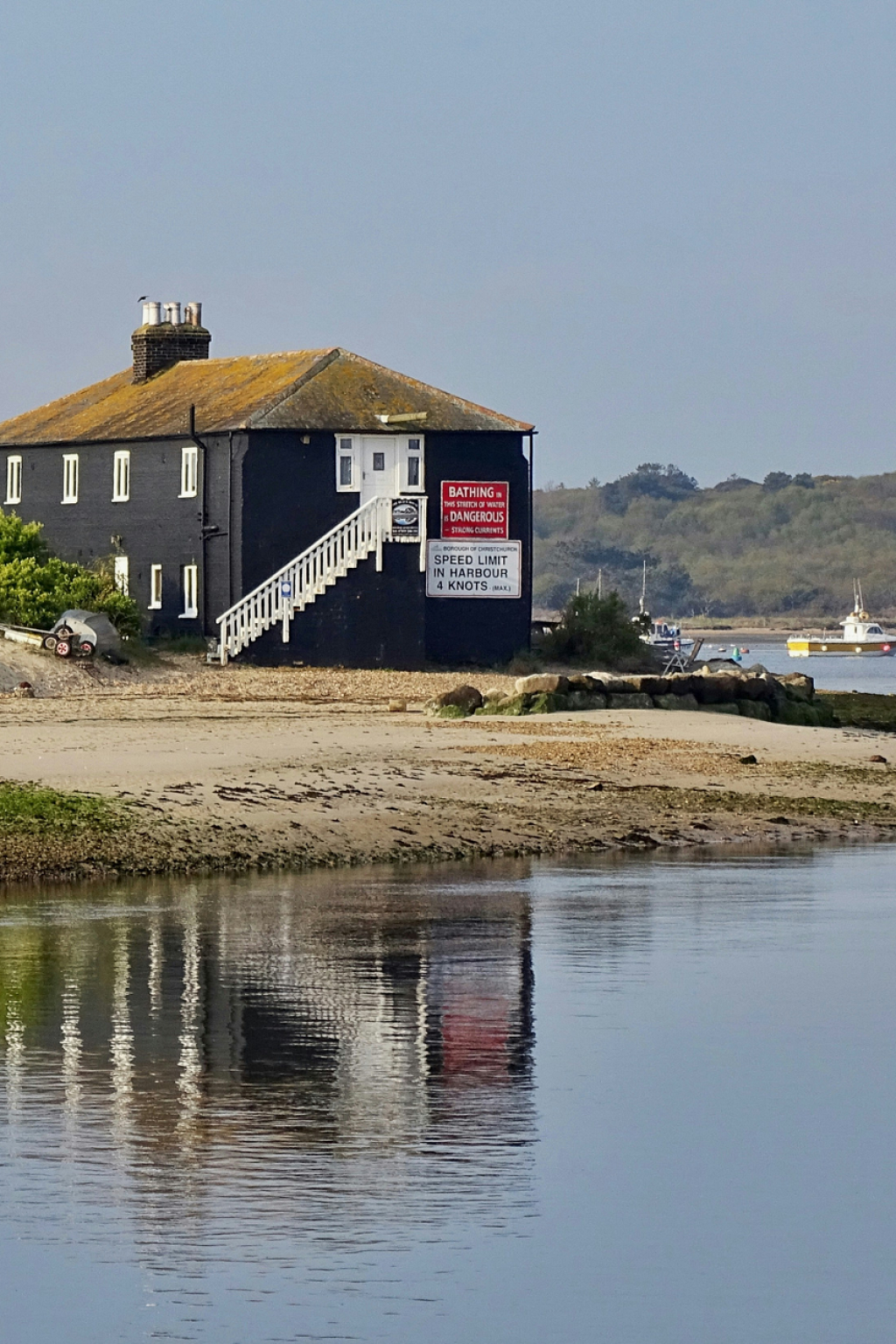
7th November 2026
A walk beside the harbour, shopping around the High Street or an afternoon on the beach can become part of everyday life when you live in Christchurch.
With its historic centre, riverside setting and access to the coast and New Forest, the area offers plenty of reasons to spend time outdoors. But living here is about more than the scenery. The location of your home will shape how easily you reach work, buy groceries, visit friends and manage the ordinary demands of the week.
Christchurch town centre, Mudeford and Highcliffe each offer a different experience. Further inland, established residential areas provide alternatives for people whose priorities extend beyond being close to the water.
We’d start by considering the life you want to lead, then checking whether a particular address makes it practical.

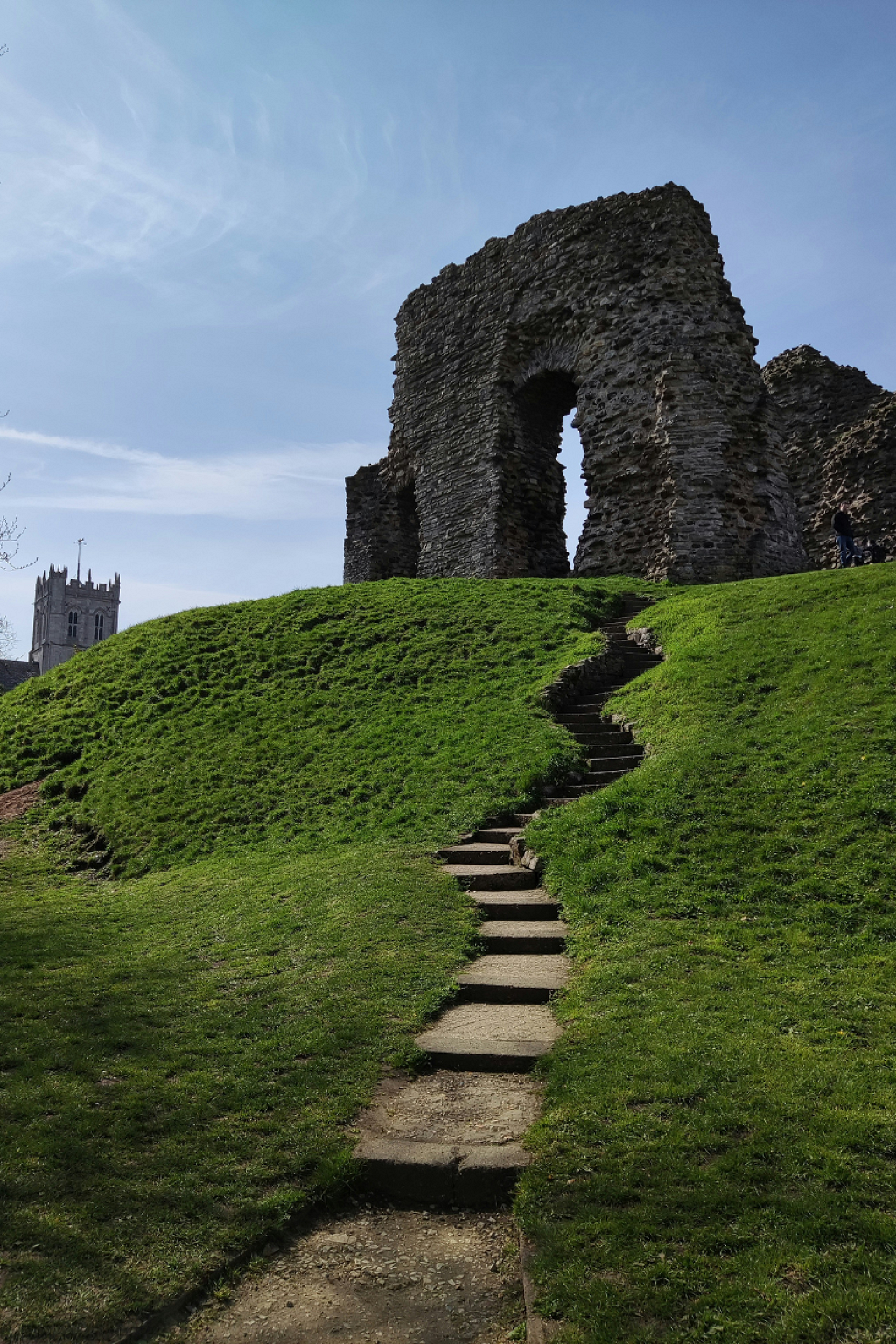
Images: Unsplash
There is no single best area for everyone. Use these introductions to build a shortlist before comparing individual streets and properties.
Christchurch town centre puts the High Street, Saxon Square, Priory and Quay within reach. It is worth considering if you want shops and places to eat nearby, although parking, noise and the walk to the station need checking from each address.
Mudeford will appeal if harbour walks and beach visits are central to your plans. Explore the distance between a potential home, everyday shops and transport, as proximity to the water does not necessarily make other journeys convenient.
Stanpit and Purewell offer locations between central Christchurch and Mudeford. Stanpit Marsh adds outdoor appeal, while local shops and established residential streets make this part of Christchurch worth exploring beyond its waterfront attractions.
Highcliffe and Friars Cliff offer another version of coastal life, with Highcliffe’s own shopping centre, castle surroundings and beach access. Include nearby Walkford in your search if you want to compare residential settings away from the immediate coastline.
Fairmile, Jumpers, Burton and Somerford broaden the choice. Fairmile and Jumpers offer inland residential options, Burton has a village setting, and Somerford is worth investigating for its local amenities and position between central Christchurch and the eastern coastal areas.
Look at the practical differences between homes rather than assuming that an entire neighbourhood will share the same atmosphere, prices or transport convenience.
Click HERE to view our guide on areas in Christchurch
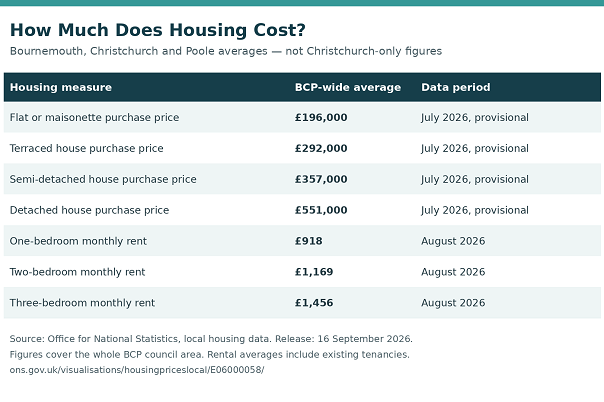
Official housing statistics provide a useful benchmark, but their geographical coverage matters.
The Office for National Statistics reported an average house price of £310,000 in July 2026, provisionally, and average monthly private rent of £1,398 in August 2026 across Bournemouth, Christchurch and Poole combined. These are not Christchurch-only averages.
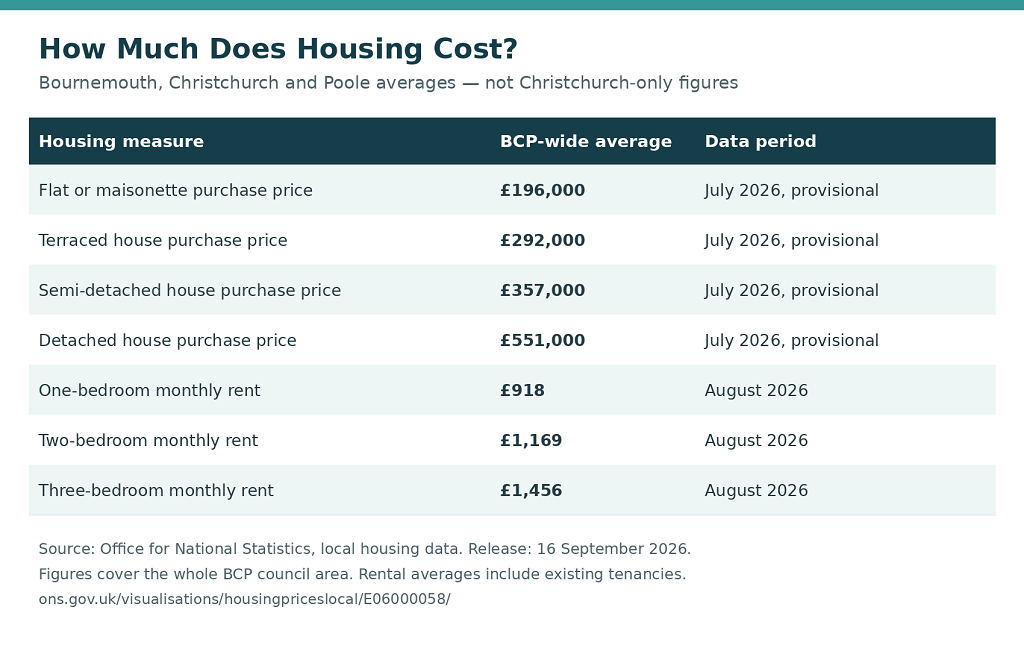
Use these figures as context, then compare current properties in your shortlisted locations. Purchase-price statistics differ from advertised asking prices, while rental averages include existing tenancies rather than only newly advertised homes.
Compare like-for-like properties and consider condition, parking, outside space and ongoing charges alongside the headline price.
Your household budget will depend on the property as well as your lifestyle.
For 2026/27, published Band D Council Tax totals, including the relevant parish or town charge, are:
Christchurch Town: £2,474.43 a year.
Highcliffe and Walkford: £2,433.75 a year.
Burton and Winkton: £2,418.41 a year.
These figures are before any applicable discounts or reductions. Check the exact property’s band and parish using BCP Council’s current charges.
Allow separately for energy, water, broadband, insurance and transport. Families should obtain childcare quotes, while flat buyers should establish service charges and likely maintenance commitments.
A home that appears less expensive may involve more driving or additional travel costs. Equally, paying more to live near amenities only makes sense if you will use that convenience.
For an introduction to the town’s shopping areas and everyday businesses, explore our shopping in Christchurch guide.
Rail, bus, walking and driving options need to be assessed from your prospective address.
Christchurch station is useful to investigate for travel towards Bournemouth, Southampton and London Waterloo. South Western Railway publishes route information and journey planning for these connections. Include the journey to the station and onward travel at your destination when assessing a commute.
For homes around Highcliffe and Walkford, also investigate Hinton Admiral station and whether its location and services suit your routine. Neither a coastal address nor a “near station” description tells you how comfortable the actual journey will be.
Bus routes vary across the area. Morebus lists the 1a between Bournemouth and Somerford via Iford and Christchurch, while the 1b serves Burton via Southbourne, Tuckton and Christchurch. Check the current network and timetables for your specific stops and travel times.
If you drive, test your commute during the working week. If you plan to rely on public transport, check evenings and Sundays as well as the morning journey.
School and childcare arrangements should be investigated before committing to a home.
BCP Council advises checking school-place availability before buying or renting. Living within a catchment area does not guarantee a place, and the nearest school is not necessarily the relevant catchment school.
Use the council’s school admissions guidance to establish the correct application process, then contact shortlisted schools about your child’s year group and needs.
The BCP Family Information Directory is a starting point for researching childcare. Confirm vacancies, hours and costs directly with providers.
Look at the whole family timetable: school runs, wraparound care, work and activities. A location that looks attractive for weekend outings also needs to work on a busy weekday morning.
Christchurch’s appeal lies partly in the variety of outdoor experiences available close to residential areas. Town-centre walks, the harbour, coastal paths and nearby countryside offer different ways to spend free time.
Its neighbourhoods also have their own centres and social connections. Highcliffe has a different everyday rhythm from central Christchurch, while Mudeford’s relationship with the harbour and coast gives it a distinct character.
The compromises are practical. Popular coastal locations can become busier in good weather, parking needs investigation, and some homes involve more travel to reach shops, stations or work.
For a prospective purchase, check environmental information at the address rather than judging risk by the neighbourhood name. The government’s long-term flood-risk service covers risks including rivers, the sea and surface water. Discuss the property-specific implications with your solicitor or surveyor and obtain insurance quotations before committing.
Getting involved locally can help Christchurch feel like home beyond the house itself.
A regular class, club or volunteering commitment provides a reason to return to the same place and start recognising people. Our clubs and associations guide introduces options across Christchurch and the surrounding area.
You can also explore our guides to social clubs in Christchurch and Highcliffe and sports and fitness clubs, checking current membership and session arrangements with organisers.
Everyday routines help too. Visiting the Christchurch Monday Market, discovering local shops or joining a library activity can make your surroundings feel familiar.
Once you have shortlisted a home, make time to:
Visit at different times: compare a weekday, an evening and a weekend.
Try your commute: include parking, connections and the return journey.
Walk to essentials: check groceries, transport stops and useful services.
Calculate the full budget: include Council Tax, bills, travel and property charges.
Confirm family arrangements: investigate school places and childcare where needed.
Research the property: ask about condition, maintenance, parking and relevant searches.
Consider renting first: particularly if you are unfamiliar with the area and want time to compare locations.
Christchurch can offer a rewarding balance of everyday convenience and time outdoors. Choose somewhere that supports your routine as well as your coastal ambitions, and the places you first enjoyed as a visitor can become part of the life you build here.
If you enjoyed this, you may also enjoy:
Information checked: 14 October 2026. Housing figures relate to the periods stated and may be revised. Confirm current charges, admissions and transport arrangements before making plans.
Featured Listings
Christchurch Priory: History, Opening Times and Visitor Information

Discover Christchurch Priory, one of Dorset's most...
Highcliffe Chess Club

Highcliffe Chess Club is a sociable club welcome...
Portfield Car Sales Christchurch

Portfield Car Sales is a local independent motor...
The Venue Christchurch's Advent Event: Six Beauty Treats for Winter

The Venue Beauty Salon & Clinic on Christchurch...
Highcliffe and Infinity Photography Club

Find out more about Highcliffe and Infinity...
Compare Bookshops in Dorset

Discover Bookshops in Dorset - across Bournemouth,...
What’s On at Highcliffe Castle this Autumn: Events, Exhibitions and Activities
Highcliffe Castle hosts a varied programme of...
Performing Arts, Music and Dancing Clubs in Christchurch and Highcliffe

Discover the Performing Arts, Music and Dancing...
Just Shutters - Plantation Shutters Bournemouth
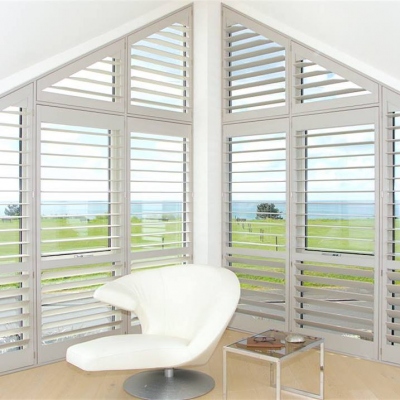
Just Shutters are experts in the creation of...
Harbour Blend Cafe - A Fresh Blend in Christchurch

Discover The Harbour Blend Co, a colourful new...


 Spanish
 Chinese (simplified)
 Dutch
 French
 German
 Italian
 Norwegian
 Polish
 Romanian
 Russian